the Annual IRMAA Update
for the coming Year
"What is IRMAA, and is there anything I can do to avoid paying extra for my Medicare because of it?"
This video concludes with the income thresholds listed
at the time we made this video.
A Roth conversion raises your Medicare Part B premium by increasing your Modified Adjusted Gross Income (MAGI), which can push you into a higher Income-Related Monthly Adjustment Amount (IRMAA) surcharge bracket two years later.
Converting pre-tax funds from a traditional IRA or 401 (k) into a Roth IRA counts as ordinary income for the year of the conversion, raising your MAGI. Medicare sets Part B premiums using your tax return from two years earlier (for example, 2026 income affects 2028 premiums.)
IRMAA uses fixed income thresholds. Crossing a threshold by even $1 triggers a full monthly surcharge per person for that year. While you can appeal IRMAA using Form SSA-44 after a qualifying life-changing event (such as retirement or the death of a spouse), a voluntary Roth conversion does not qualify.
IRMAA Brackets and Cost Impact
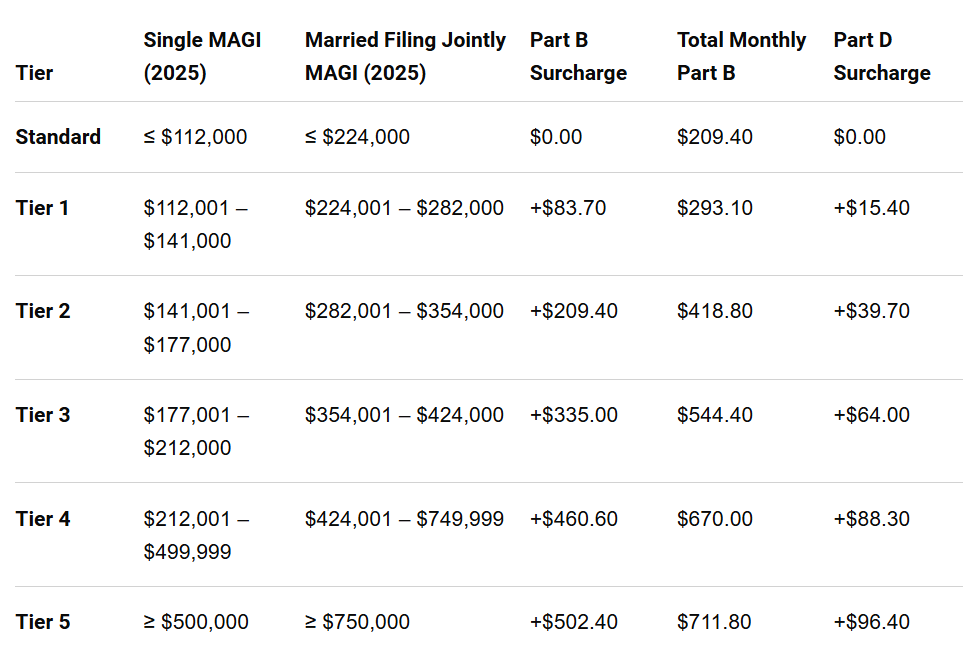
Crossing into higher income tiers due to a conversion, introduces monthly surcharges per person that scale up with your MAGI.
For example, the base Part B monthly premium for 2027 will be $209.40 for individuals under $112,000 (or married couples, filing jointly, under $224,000). Exceeding these baseline thresholds triggers incremental surcharges that raise total monthly Part B costs up to $711.80 per person for top-tier incomes.
None of these numbers include the IRMAA for prescription drug plan premiums, either. While Part B income-related-monthly-adjusted-amounts go directly to the federal government, Part D surcharges are paid on top of your regular Part D plan premium to the insurance company.
REQUIRED DISCLOSURES
